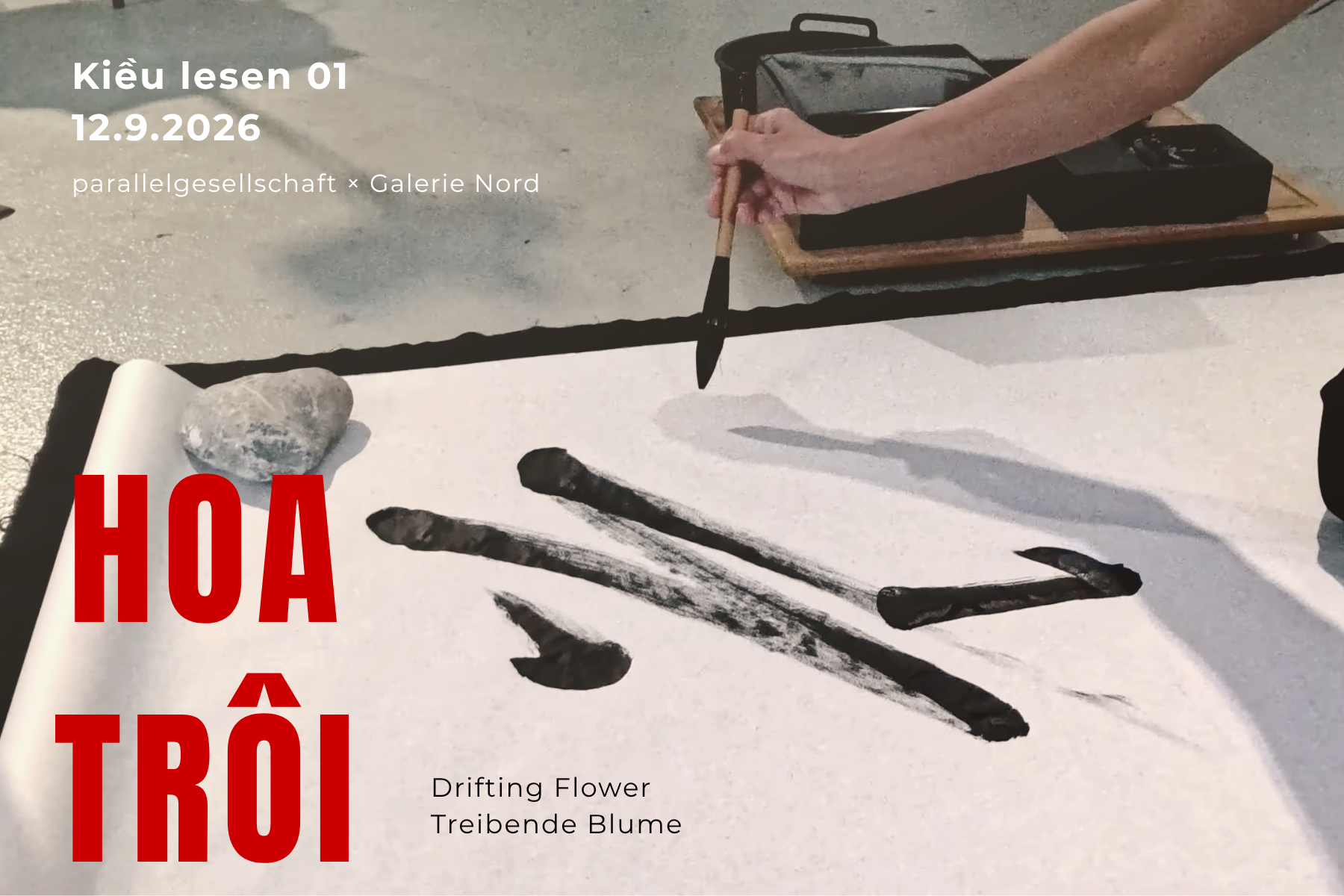
Kiều Lesen – Reading Kiều · Session 1 · 12 September 2026 · parallelgesellschaft × Galerie Nord
What can a poem from the early 19th century tell us today? That’s the question behind Kiều Lesen – Reading Kiều, and the first evening approached it through a single image: hoa trôi, the drifting flower.
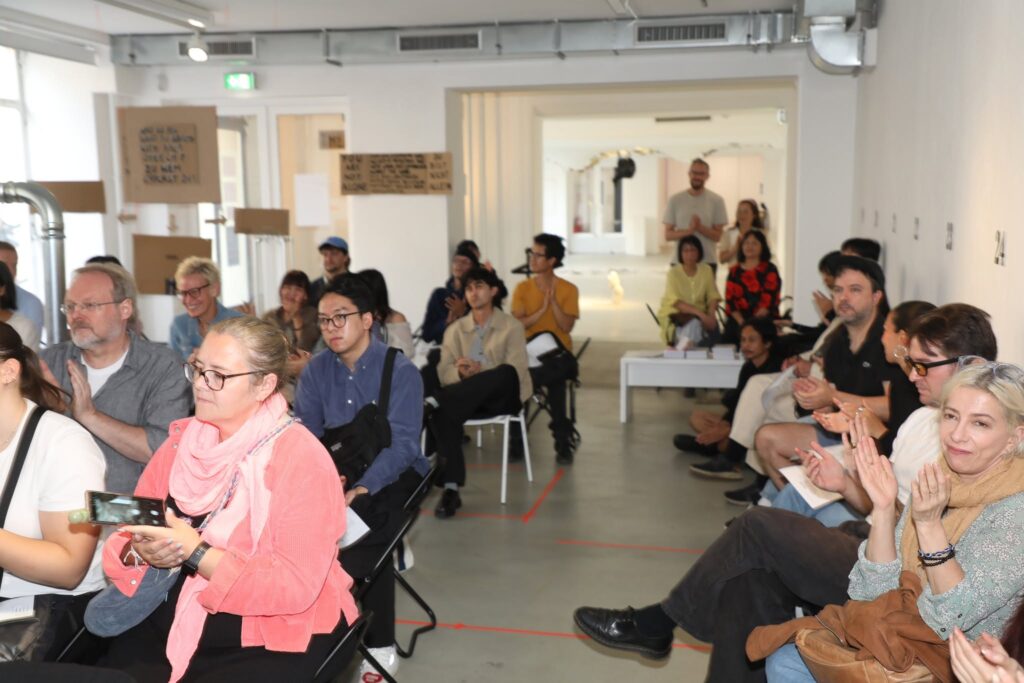
We met at parallelgesellschaft ╳ Galerie Nord in Berlin-Moabit, surrounded by two exhibitions then on view: CIEL by Thuy-Han Nguyen-Chi with Andrew Yong Hoon Lee, and Das letzte Wort by Miriam Coretta Schulte and Mohit Thatte.
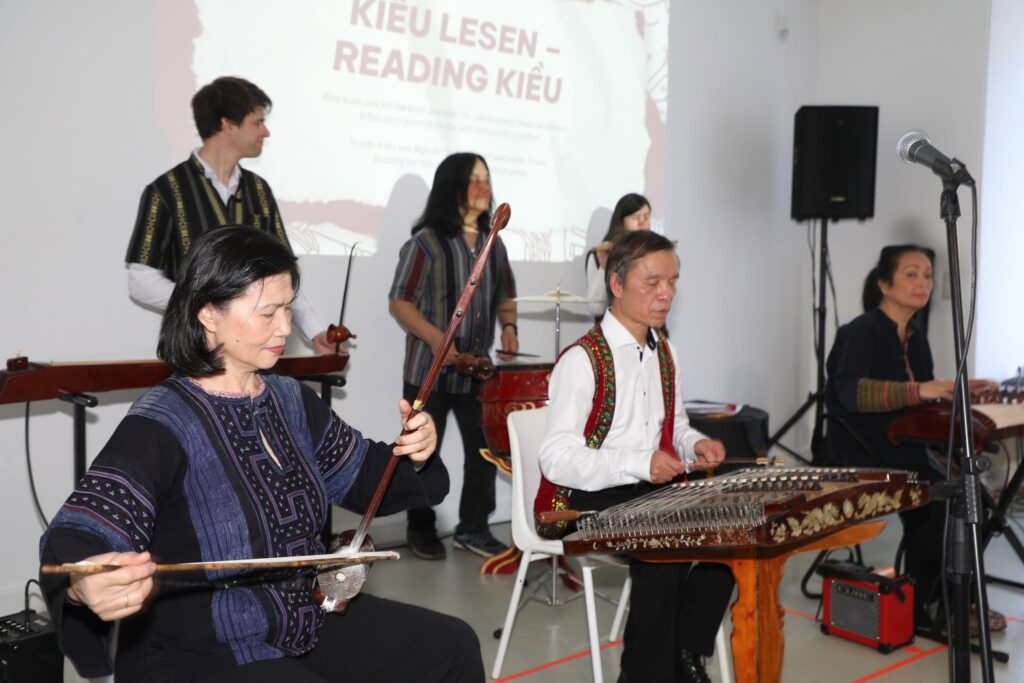
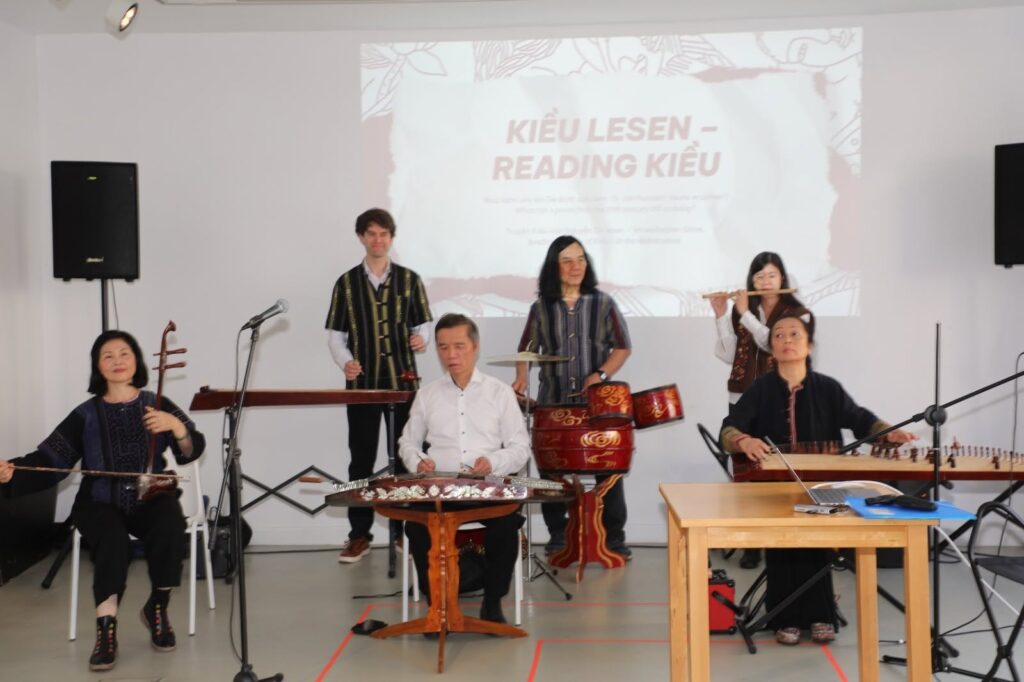
Lotus Ensemble opens Kiều Lesen – Reading Kiều with traditional Vietnamese music.
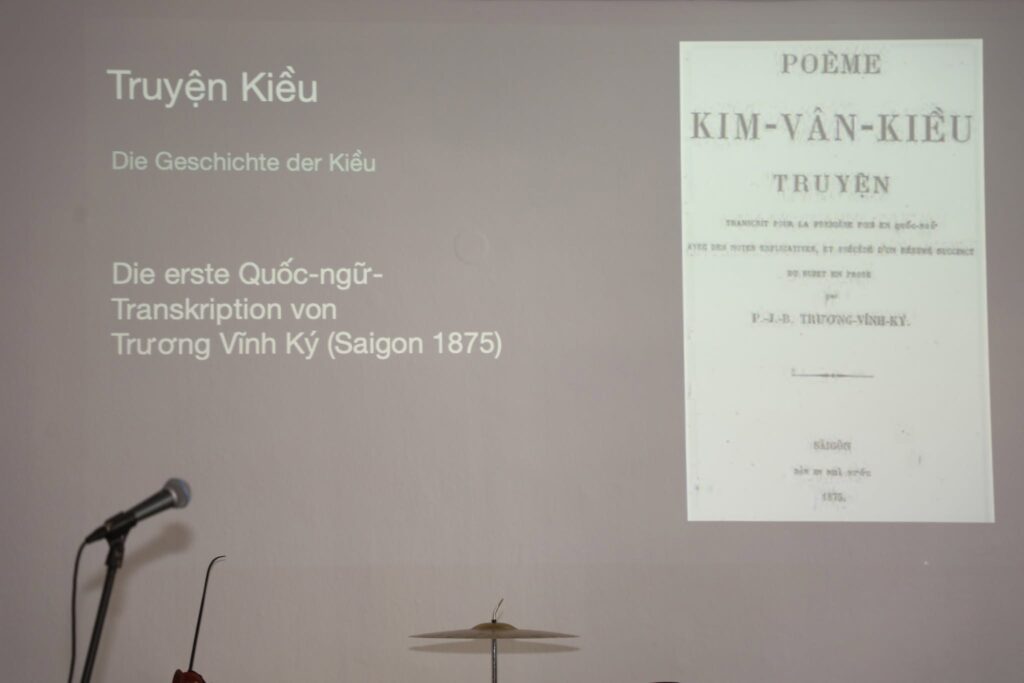
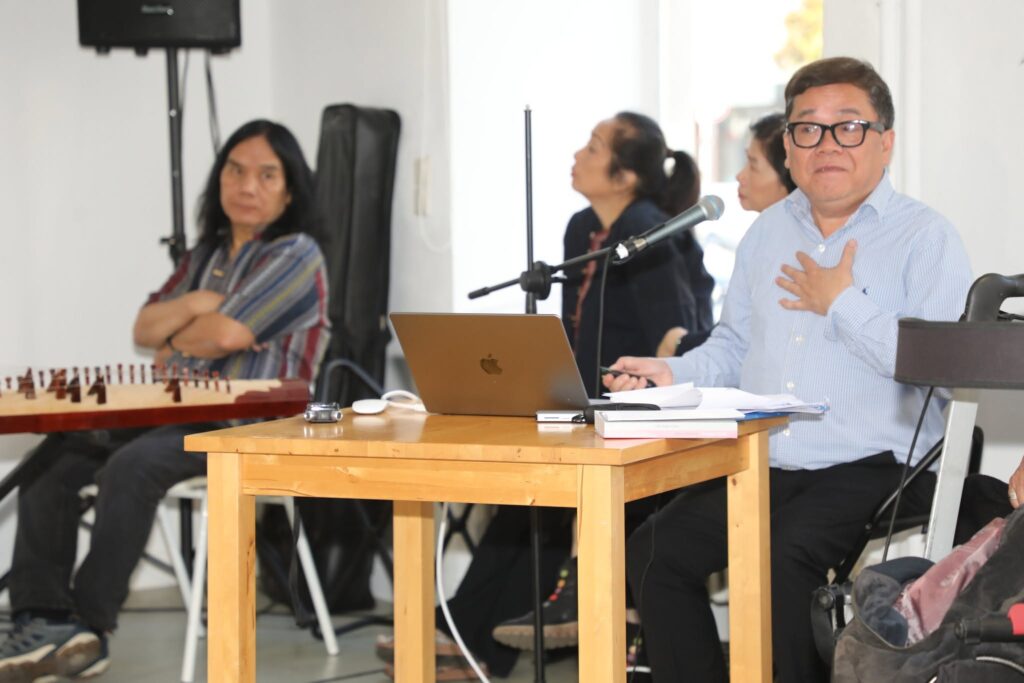
The evening opened with traditional Vietnamese music by Lotus Ensemble. Dr. Trương Hồng Quang then introduced Nguyễn Du and the turbulent times he lived through, including his travels through China. He traced how Kiều reached readers through different scripts and translations, including Irene and Franz Faber’s German rendition. He also introduced the drifting-flower image and ngâm Kiều, the melodic recitation of the poem, which we would hear a few minutes later.
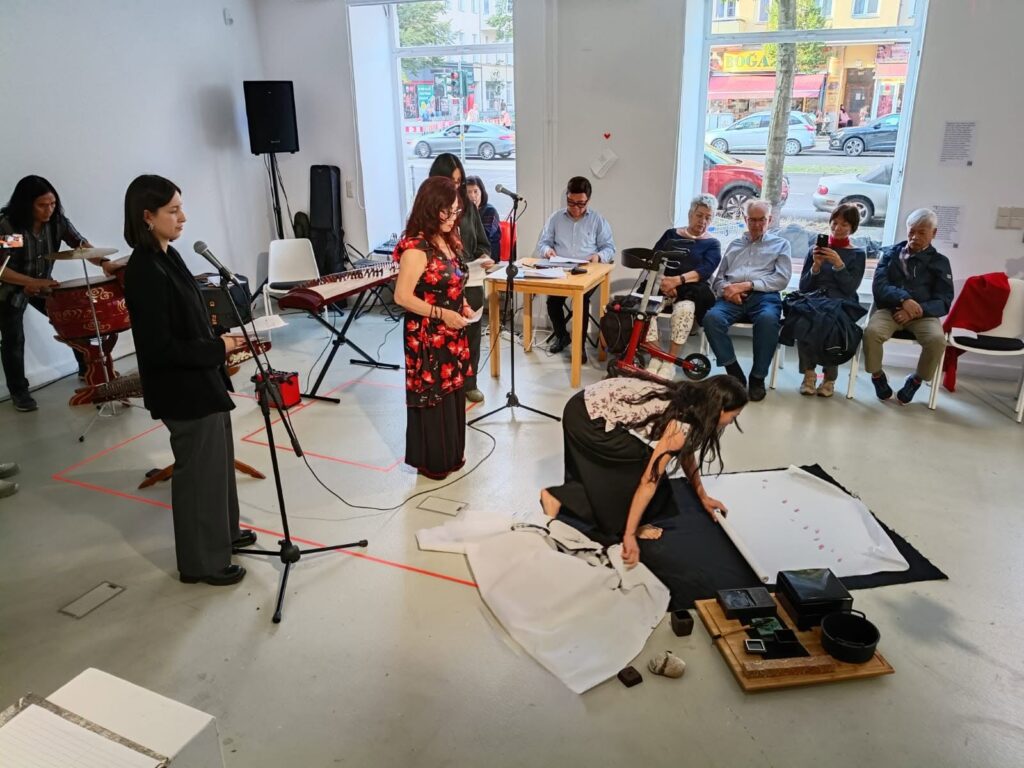
Then came Hoa Trôi, the multiform poetry performance conceived by Dạ Thảo Phương. bringing together Vietnamese, German, and English readings, calligraphy, and percussion. In her program text, she gives the story behind it: a woman born in Hanoi, now living in Berlin, learns chữ Nôm, and reads Kiều with others who have their own experiences of diaspora.
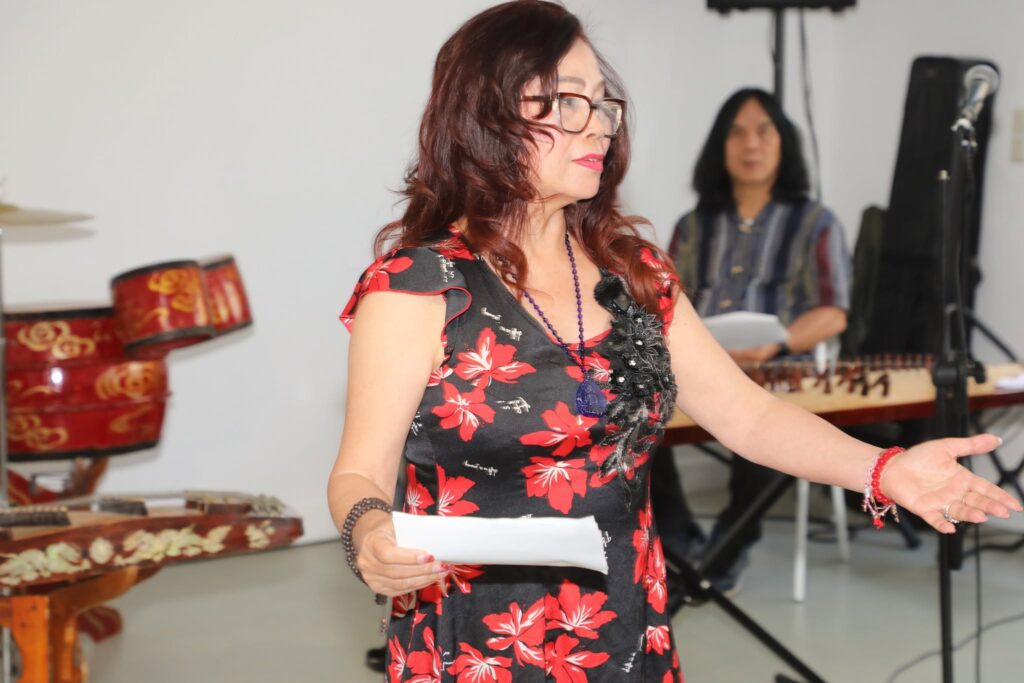
Phạm Quỳnh Nga’s voice fills the room as she walks through the audience, reciting the poem’s opening lines in the melodic ngâm Kiều style.
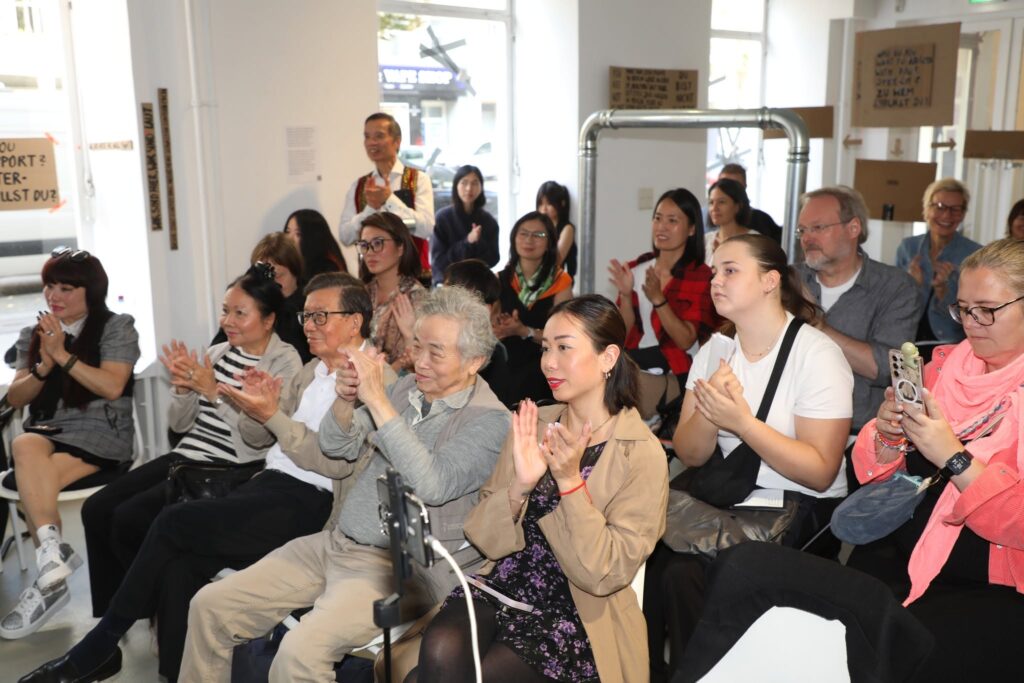
It began with an empty performance space and a moment of silence. Amelie and I slowly spread a long sheet of paper across the floor, marked with fingerprints guests had left as they arrived. After another pause, a voice rose from the back of the room: Phạm Quỳnh Nga, standing among the audience, chanting the poem’s opening lines. For some guests who had grown up hearing Kiều recited, it was a moment of reconnection.
Four sections followed flower imagery through the poem: the plum blossom and snow used to describe Kiều and her sister, the displaced flower, the flower in the road, and goodness rooted in the heart. We read the passages in Vietnamese, German, and English, with a final “Echo” returning us to the wind and waves at Ngưng Bích.
The German readings drew on Irene and Franz Faber’s translation. The English passages brought together different translations, allowing us to hear how the words and images changed from one version to another.
The title comes from the passage at Ngưng Bích, where Thúy Kiều, alone and looking out toward the sea, sees her uncertainty reflected in flowers carried by the current:
Buồn trông ngọn nước mới sa,
Hoa trôi man mác biết là về đâu?
She sadly watched the river flow to sea –
where would this flower end, adrift and lost?
(Translation: Huỳnh Sanh Thông)
Auf dem Wasser trieben Blüten. Kannten sie ihr Ziel?
(Translation: Irene & Franz Faber)
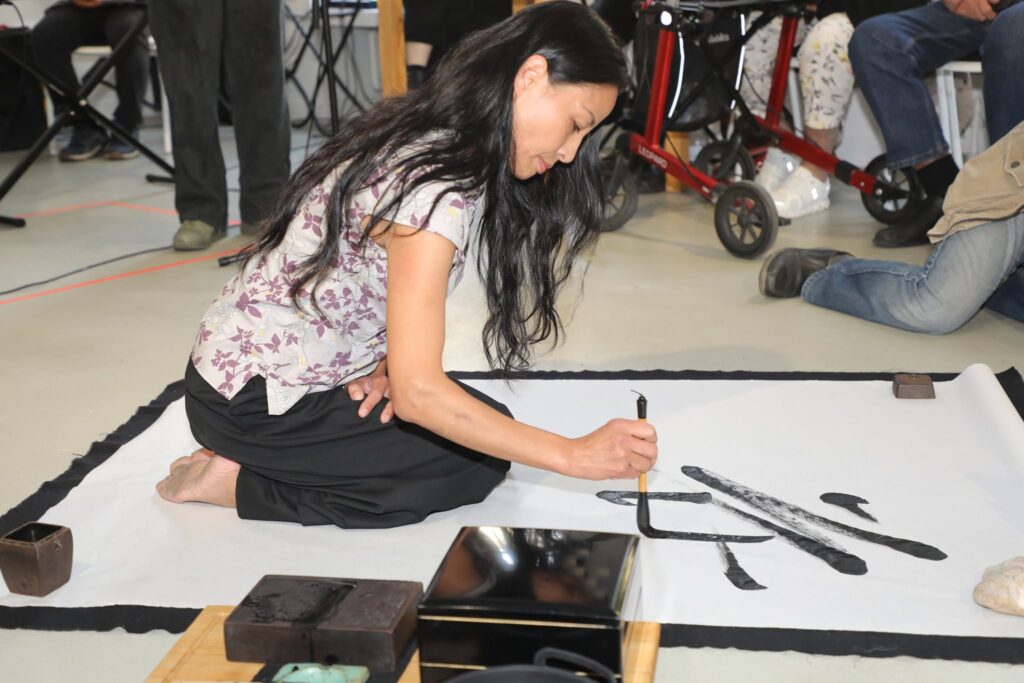
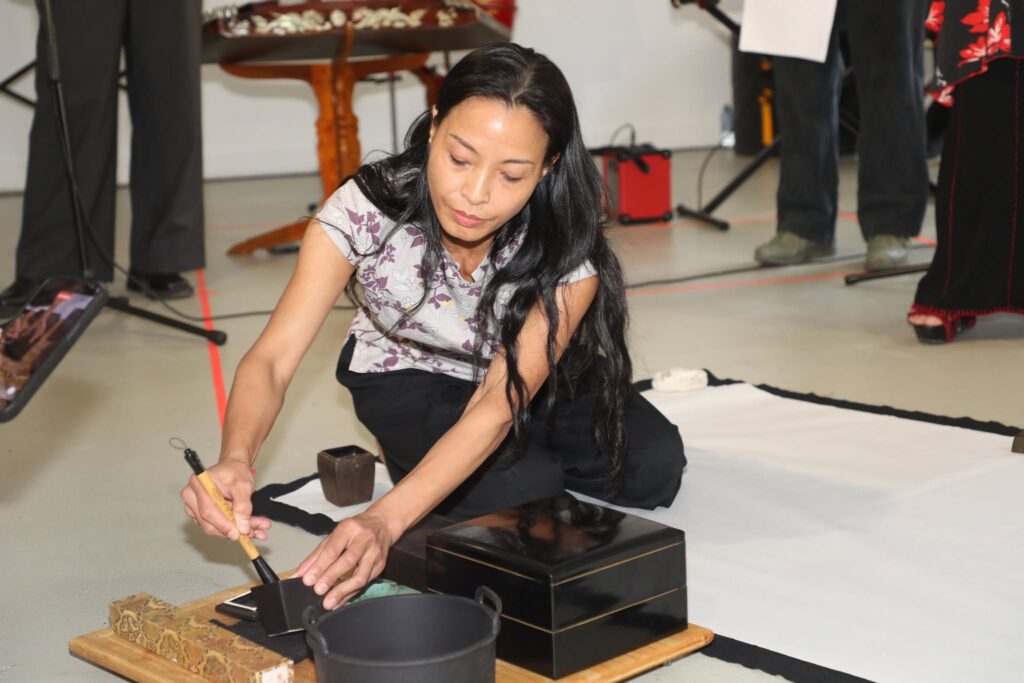
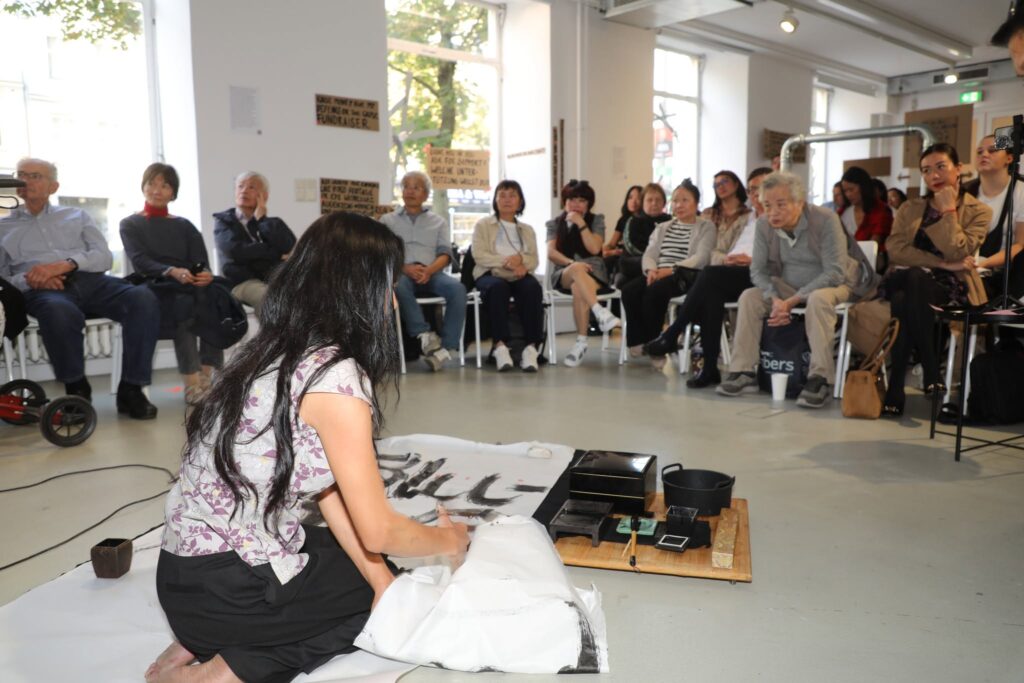
Dạ Thảo Phương writes hoa – flower – in chữ Nôm with brush and ink.
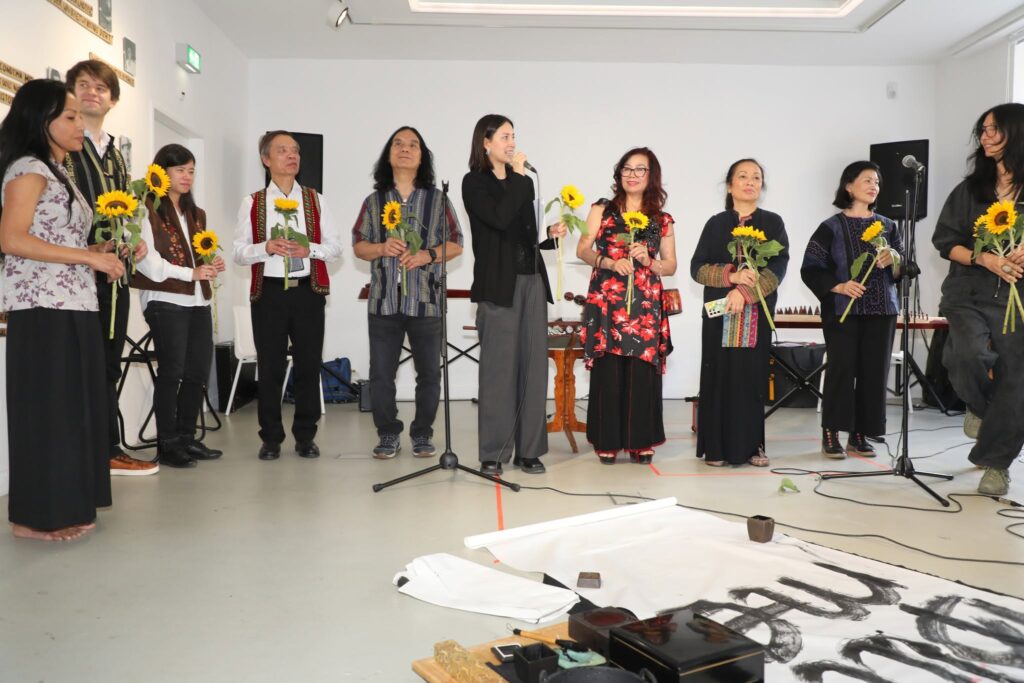
As the readings unfolded, Phương ground ink and wrote hoa – flower – on the paper with a brush. In the section about the flower in the road, the readers stepped onto the paper and crossed the fresh writing, echoing the image of a flower trampled underfoot. Phương then wrote trôi – to drift. After the verses about goodness rooted in the heart, she wrote hoa once more.
The final “Echo” returned to Kiều hearing the wind and waves around her seat. The readings gave way to Lê Mạnh Hùng’s percussion, played by hand, building like waves and breaking off at its peak. Then the drifting-flower line returned in Vietnamese and German, before the microphone passed to the audience for the English: “Drifting flowers on the water. Where would they go?”
Excerpt from Kiều Lesen #1 – Hoa Trôi. Video: Hải Lê Thanh · Edit: Amelie Mai Gottsmann.
Moving between countries, languages, and stages of life was familiar to many in the room. But Kiều doesn’t only drift. Session 2 turns to another side of her story: her decision to cross the garden at night to meet Kim Trọng, and the choices and constraints that follow.
With: Lotus Ensemble, Trương Hồng Quang, Dạ Thảo Phương, Phạm Quỳnh Nga, Amelie Mai Gottsmann, Alisa Anh Kotmair, and the audience.
Read Dạ Thảo Phương’s interview about the event with Một Thế Giới (in Vietnamese).

All photos: Nico Schröder.